Tardigrades: Tiny but Mighty
- Feb 15, 2025
- 2 min read
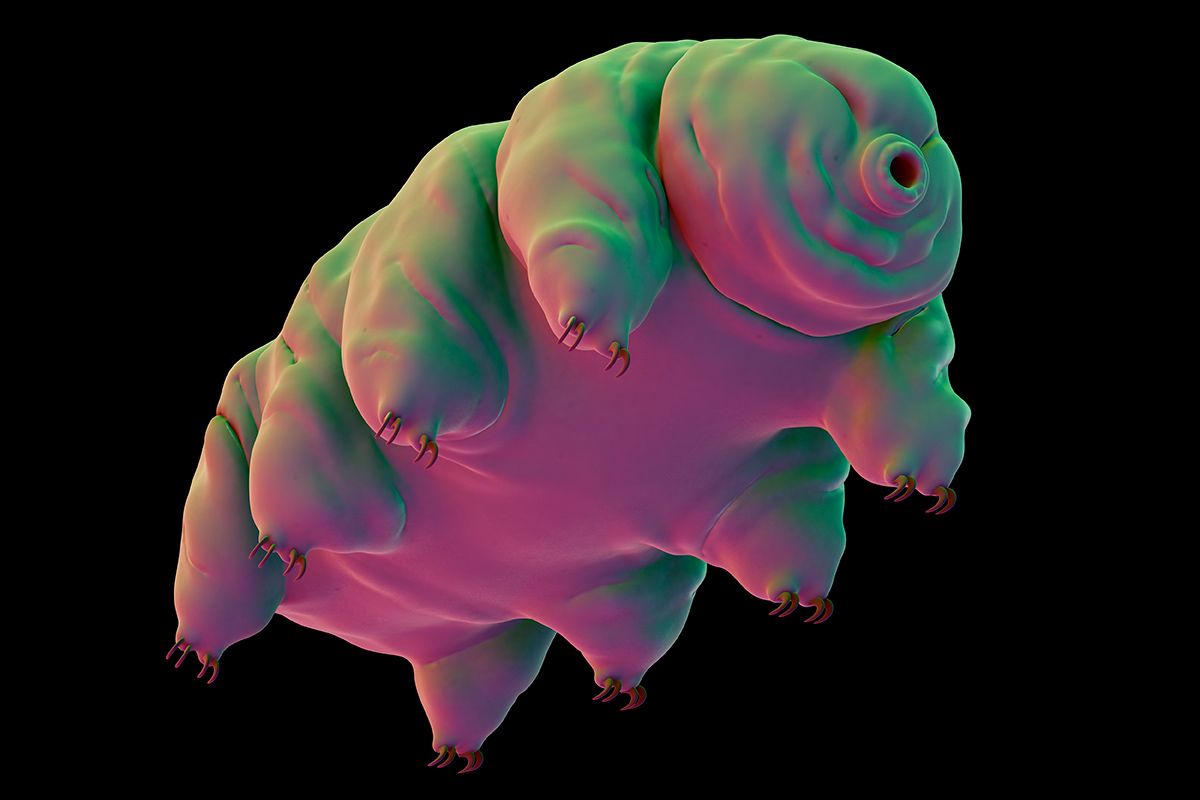
Tardigrades are these tiny, almost microscopic, aquatic creatures that can do amazing things for their size. I think these little organisms are so cool and we don’t talk about them enough. So here are the basic, and very cool, facts about these tiny but mighty creatures.
Tardigrades go by multiple names, including water bears and moss piglets. Do they particularly resemble either of these animals? I don’t think so, but the names are cute. There

are 1,300 known species of tardigrades and all of them can survive extreme conditions that are typically not conducive to life. These include freezing temperatures, extreme pressure, intense radiation, drought, and the vacuum of space. Yes, you read that right. Humans have literally put tardigrades outside into the vacuum of space and they were fine. They can do this by entering a state called cryptobiosis. When tardigrades enter cryptobiosis, they squeeze 95% of the water out of their cells. This causes special proteins in the tardigrade’s cells to activate and form a hard, glass-like coating around the cells, protecting them from the
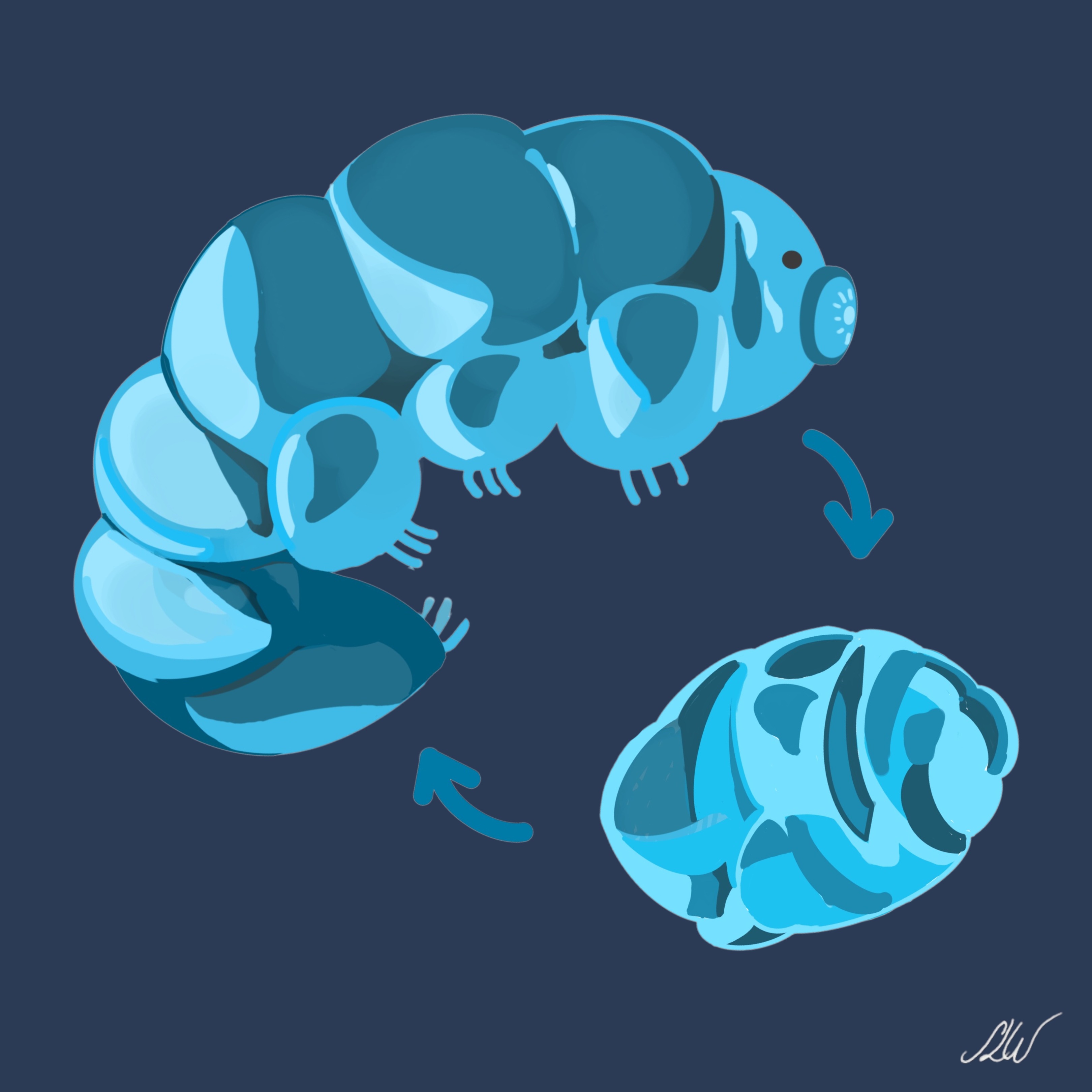
environment. Then the tardigrade retracts its head and legs, slows down its metabolism to almost nothing, and curls up into a little ball known as a “tun” until conditions are more favorable. This tun state can be triggered by 4 things: too much salt, not enough oxygen, dehydration, and freezing temperatures. Once in cryptobiosis, the tardigrade waits for more favorable conditions to emerge, and then rehydrates. Outside of their tun state, tardigrades live between 3 months and 2.5 years, depending on the species. But because they can exist for up to a century in this death-like state, tardigrades can technically live to be over 100 years old, which means that there could be tardigrades out there that have been alive since WWI.
Tardigrades are found all over the world. They live in any quantity of water at any elevation, from oceans to lakes to drops of water on plant leaves. They mostly eat plants and algae, though some species do eat tiny worms and microscopic invertebrates called rotifers. Tardigrades have been here since before humanity and will probably be here after us. Despite their microscopic size, they are basically invincible. However, they do have one fatal weakness: hot water. These wonderful little creatures can die in less than a day if left in water over 100 degrees Fahrenheit, which seems like an evolutionary flaw to me. Being on the outside of a spaceship for a period of time won’t kill them, but boiling water will? That makes about as much sense to me as Green Lantern being defeated by the color yellow. But, I suppose nothing can be truly invincible and these mighty little creatures have to have something to balance out their strength, or else we might live in a world ruled by tardigrades.

Sources


Comments