The Origins of Christmas
- Dec 25, 2025
- 6 min read

Celebrations of the birth of Jesus, which Christmas is largely about, have been confirmed to have existed as early as 1800 years ago, though it was only confirmed to be on the 25th of December by the late 4th century.
However, we can't attribute all Christmas traditions to early Christianity. Just as English has words sourced from many different languages, Christmas has traditions from all over the world and is celebrated differently all over the world!
Origins
Yule
In Pre-Christian northern Europe, the winter solstice was celebrated every year, with this celebration being called Yule. Unfortunately, there aren't many records of what Yule entailed, specifically, but there have been some educated guesses.
For example, due to the harsh climate of northern Europe, most cattle were likely slaughtered to avoid feeding them during the long winter months. Thus, there would have been a large amount of fresh meat for people to feast on, before they preserved it for the future, or sacrificed it, as many historians believe. Additionally, most winter solstice celebrations revolve around fire and the sun. In Yule celebrations, large bonfires were lit in order to scare off spirits.
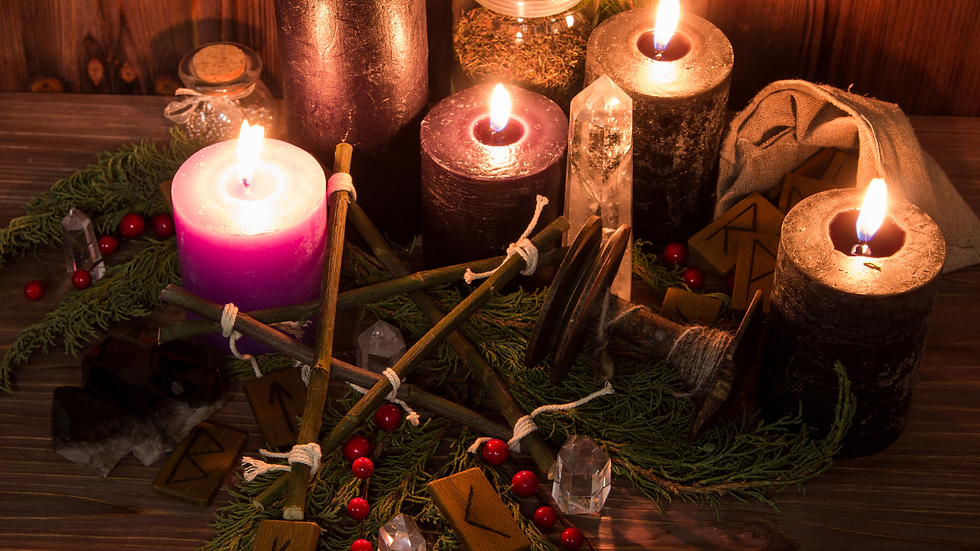
As the people of northern Europe were integrated into Christianity around the 10th century CE, some traditions emerged in the celebrations of Christmas which may have come from older Yule traditions. A well-known example of this is the Yule Log, which is supposed to burn for the twelve-day Christmas celebration. Today, the Yule Log is typically a dessert designed to look like a log of wood.
Additionally, in Sweden, a Yule Goat is constructed out of straw or wood. This can be attributed to old worship of the Norse god Thor, whose chariot is driven by two goats. The Yule Goat was also regarded as a spirit who ensured that Yule preparations were done correctly.
Starting in the 1960's, several towns have erected large Yule Goats every Christmas season. Likely due to their size and visibility, people have attempted to vandalize or burn down these goats, leading to higher security around them and increased media attention, which only incentivizes the arson.
Saturnalia
Saturnalia was a Roman feast taking place between the 17th and 23rd of December. This period was a time of revelry and feasting. People disregarded social norms; gambling was socially acceptable, and slaves were treated on the same level as free people. While this seems far different from modern Christmas, but Christmas in the Middle Ages was quite similar to this, sporting a carnival atmosphere.
It is possible that, during the days of early Christianity, church leaders hoped that they could encourage conversion by allowing people to celebrate on the same dates, leading to the canonization of Jesus's birthday as the 25th of December.

During Saturnalia, someone because the "King" of the festivities, being called the Saturnalicius princeps. This person would be in control of the festivities and often ruled in ridiculous manner, preserving the light-hearted tone of the festival. It is possible that this position was created to satirize the transition of the Roman republic into an empire by showing how absolute power can be a foolish prospect.
This tradition was reflected in the medieval "Lord of Misrule," who was appointed and ruled in a similar manner for the Feast of Fools, which took place on January 1st. This feast echoes other Saturnalia traditions, such as the inversion of the social order, and was created to impart the message that power corrupts. Though the Feast of Fools was not associated with Christmas day itself, it still took place within the liturgical season of Christmas.
Traditions
Poinsettias

Poinsettias have been considered a symbol of the Star of Bethlehem since the 17th century, and their red color represents the blood of Jesus. There is also a folk tale about poinsettias: a poor child gathers weeds so that she can offer something to baby Jesus. When placing these at the feet of the baby Jesus, they transform into brilliant poinsettias.
This tradition is not common outside of North America.

Christmas Tree
Possible predecessors for Christmas trees could be found in a Scandinavian tradition during winter which survived the conversion to Christianity. In this, they put evergreen trees around their houses in order to scare away evil. They could also come from a tradition of decorating with evergreens during Saturnalia.
Modern Christmas trees, however, originated in Central Europe around the turn of the 16th century. On occasion, they are attributed to Martin Luther.
Christmas trees are generally decorated with ornaments; baubles of various materials. These trees having lights on them, and are topped with a larger ornament—typically a star or an angel. They are sometimes decorated with garlands, tinsel, or ribbons.
Food
The dishes served during Christmas vary wildly depending on what country or region one decides to look at. Here are a few examples:
Ireland
In Ireland, main dishes served around or on Christmas include roasted turkey or spiced beef, which is beef preserved with spices instead of or in conjunction with salt.
For sweet items, cakes, Christmas puddings, sherry trifles, and mince pies are typically made. Mince refers to mincemeat, which—contrary to expectations, is a combination of fruits with small amount of fats or oils. Meat can be included in it but is not required.
Irish coffee—an alcoholic drink containing whiskey, hot coffee, and sweeteners, topped with cream—is often drunk.
Belarus
In Belarus, a main dish served around Christmas is borscht, which is a sour soup made of a variety of ingredients, depending on which type one makes. They all share the common factors of stock and vegetables. The most famous variety of Borscht is a Ukrainian variant which uses red beetroots. In the far past, it may have been made with hog weeds. Cabbages are also common.
Kutia is a sweet dish made of wheat berries (which produce flour), poppy seeds, and sweeteners such as sugar or honey. Some nuts and dried fruits may also be added.
New Zealand
In Ireland, foods served during the Christmas season include lamb dishes, ham dishes, seafood dishes, and potato salad.
One interesting method of cooking food used in New Zealand is Hāngī, which today is only used for special occasions. This cooking method involves digging a pit, a bit generally 2-3 feet deep, heating up rocks with a fire, placing food baskets on top of these rocks, then burying the baskets for a few hours. There are modern appliances that imitate this process.
Desserts can include Christmas puddings, trifles, and mince pies, similar to Ireland. Cherries, strawberries, and candy are also options.
Wine is generally drunken during Christmas time.
Japan
Due to very successful advertising when expanding into the Japanese market, KFC has become intrinsic to Christmas in the country. Orders for Christmas are sometimes placed months in advance. Poached egg salads, hot pots, grilled meat, and Japanese omelets are also sometimes eaten.
In regard to sweeter foods, caramel custards, sugar cookies, parfaits, or ice cream can be eaten.
Common Myths
Coca-Cola invented Santa Claus
Coca-Cola is occasionally known as the creator of Santa Claus. However, the only thing which can be safely attributed to them is the popularization of the red outfit which he wears. In a drawing from the 19th century, Thomas Nast, an artist, shows Santa Claus in his modern form.
Of course, the idea of Santa Claus has been around for a very long time, originating from the tale of St. Nicholas. One of the more popular things he is known for is secretly giving golden coins to three girls to prevent them from being sold, and many of his other exploits follow the same pattern of helping people.

Jesus was born on December 25th
Of course, the entire basis of Christmas is the birth of Jesus. Though there is evidence people had been worshiping the birth of Jesus for quite some time, no date for his birth was made canon until 336. There has been speculation that this date was chosen to allow people who believed in the Roman gods an easy transition into Christianity, as they could celebrate at the same times.
Another reason for the date of December 25th is the idea that Jesus was conceived and died on the same day, though many years apart. As it was believed that he died on the 25th of March, his birthday was set to be 9 months later—the general length of a pregnancy.
Learning More
For a broad overview of Christmas in general, there is an article on World Book Online titled "Christmas". If you want to learn more about the fascinating pagan roots of Christmas, then "How Christmas Became Christmas", and many other books in Biblioboard, are great resources. For more information about the Christian roots of Christmas, read "Hidden Christmas : the surprising truth behind the birth of Christ", and for a more modern look at the holiday, I would recommend "American Christmas Stories".
Happy Holidays!
Sources:


Comments