Fresh Reads for Spring
"Instructions for Dancing" by Nicola Yoon

"Instructions for Dancing" follows Evie Thomas, a cynical teen who no longer believes in love after her father’s infidelity and parents’ subsequent divorce. Interestingly enough, Evie also gains the power to see a couple’s entire romantic fate (from beginning to end) when she witnesses them kiss, which really puts the final nail in the coffin of Evie’s belief in love. Things turn around, however, when she meets X, a talented dancer at LaBrea Studio. X is nothing like Evie, but she finds herself drawn closer and closer to him over the course of the novel. Evie must decide if love is worth the risk and if she is willing to risk it for love. I loved this novel for its characters, its plot, and overall development. Evie is reserved but full of verve. Yoon develops the novel with her unique flair. The relationships between the characters cannot be understated, especially Evie and her friends, who are always there for her. Borrow it from the library here (as a book) or here (as an audiobook).
"Yes No Maybe So" by Becky Albertalli & Aisha Saeed

"Yes No Maybe So" follows Maya and Jamie, two Georgian teens interested in civics who were friends as children, lost touch, and now are canvassing for a political candidate together. Both the characters develop well individually and together over the course of the novel. Jamie gets over his fear of public speaking and is able to reduce his anxiety in social situations. Maya, who is growing apart from her best friend and whose parents are separating, also gets a great deal of character development. Their relationship also develops very realistically over the course of the novel and the two have to face struggles together. The book balances important issues pretty well. Albertalli, who is Jewish, and Saeed, who is Muslim, tackle the complex issues of antisemitism and Islamophobia very well. If you enjoyed "The Voting Booth" by Brandy Colbert, you should definitely read "Yes No Maybe So". Borrow it from the library here (as a book), here (as an audiobook), or here (as an ebook).
"Salt to the Sea" by Ruta Sepetys

I utterly adore "Salt to the Sea". Sepetys (pronounced “suh-pet-ees”, like “spaghettis”) is one of our most talented contemporary historical fiction authors, and you can see it in books like "Salt to the Sea". The book follows four young refugees—Joana, Emilia, Florian, and Alfred—who are fleeing East Prussia during World War II and also tells the story of the forgotten disaster of the sinking of the German ship Wilhelm Gustloff, which claimed 9,000 victims. The book has a lot of perspective switches between the characters, but this is typical of Sepetys’ novels and pretty easy to follow. The plot is well-developed (though it is hard to say anything without giving too much away) and so are the characters. Despite having so many characters, Sepetys develops each of them well. Sepetys’ voice is poetic and spare; she doesn’t waste words and she doesn’t mince them, but each of them means something. The book is both beautiful and savage and the symbolism of various objects in the novel is stunning. It is, however, a little darker and definitely emotionally devastating. Accolades: "Salt to the Sea" won the Carnegie Medal for Writing. Borrow it from the library here (as a book), here (as an audiobook), or here (as an ebook).
"Tokyo Ever After" by Emiko Jean
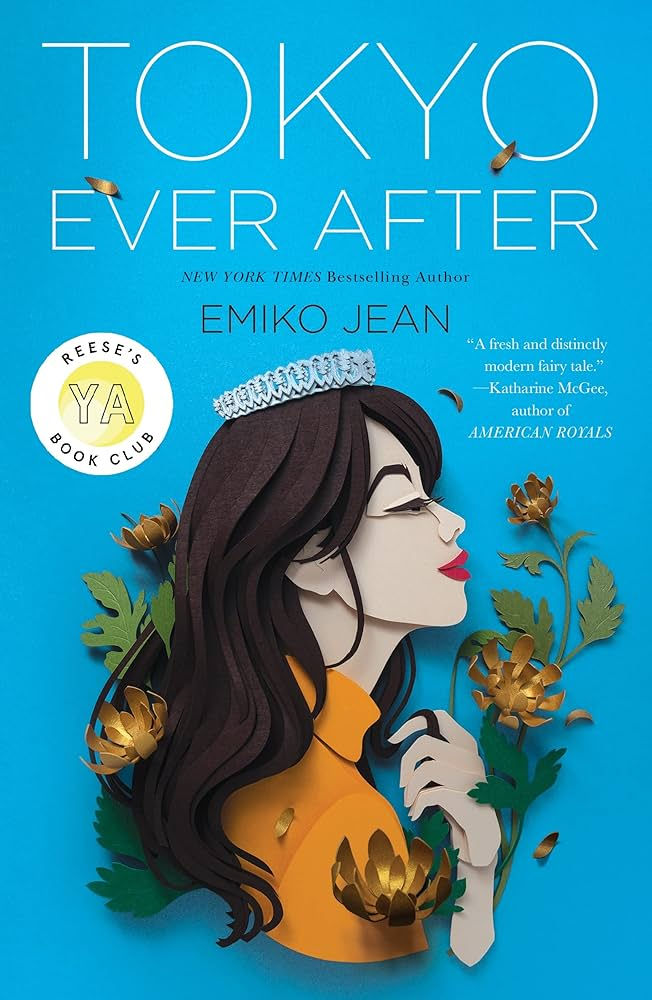
Izumi “Izzy” Tanaka, an irreverent Californian girl who struggles to fit in and is the daughter of a single feminist mother, learns she is also the daughter of a Japanese prince and a princess herself. Izzy travels to Japan, where she is treated badly by her royal family, has to learn a ton of royal custom in two weeks, and falls in love with her bodyguard, Akio. While it sounds formulaic (and very "The Princess Diaries"-y), I really enjoyed this book. Tanaka’s struggle with not being American enough in California and not Japanese enough in Tokyo is portrayed very realistically and is highly relatable for anyone who is a child of immigrants (or just feels like they don’t fit in). Her relationship with her mother encapsulates perfectly what a relationship between an equally opinionated mother and daughter is like, and the relationships she builds with the other characters she meets over the course of the novel are just as precious. Watching her get to meet and know her father is really touching, and her romance with Akio develops well over the course of the novel. Even better, however, is Izzy’s own development and characterization over the course of the novel. Despite being Asian, Izzy isn’t a straight-A student and subverts stereotypes in numerous pleasing ways. Her character is also revealed through her relationships with other characters and how she treats others. Jean neatly handles issues of royalty, politics, classism, and racism with her usual honest and direct style. "Tokyo Ever After" leaves quite the impression. Borrow it from the library here (as a book) or here (as an audiobook).
"Violet Made of Thorns" by Gina Chen
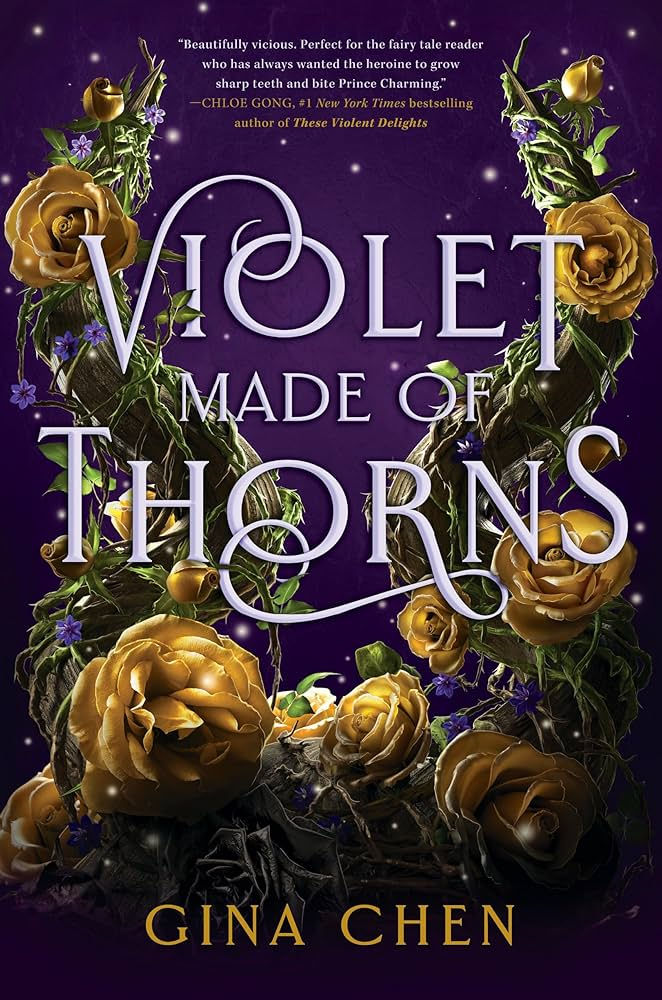
The protagonist, Violet, is a seer who often lies about her divinations to ensure her own survival. Some years before the start of the book, Violet has a prophecy regarding the death of cursed prince Cyrus and saves him. Due to this, Violet is made a seer for the king, who shares Violet’s pragmatism. However, this morally grey aspect of her character and her belief that it is sometimes necessary to lie to get ahead puts her at odds with Cyrus, who is also the love interest. Violet is a very well-developed protagonist and quite interesting to read. Chen describes Violet’s backstory enough that the reader can understand her motivations and development. The romance is subtle and not the primary plot driver in the book. The book is fun and lighthearted, not at all heavy or dark. Filled with plenty of twists and a fascinating and well-developed fantasy world, "Violet Made of Thorns" is perfect for any connoisseur of the YA fantasy genre. Borrow it from the library here (as a book) or here (as an audiobook).


