Arabic History and Heritage
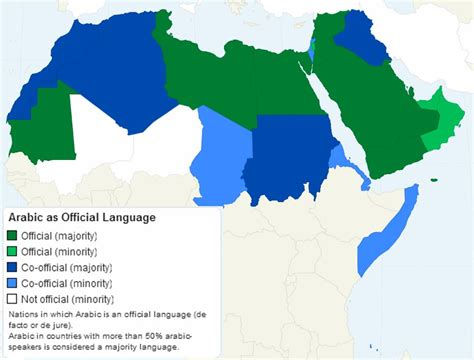
Every April since 2021 has been federally recognized as a month celebrating the vast Arabic heritage. Large populations of the planet speak Arabic, from Morocco to Somalia to Bahrain, making Standard Arabic the fifth most-spoken language in the world. With such a wide area to cover, Arabic culture varies greatly from region to region. Despite these differences, Arabic culture is worth discussing and has contributed to the world in many positive ways.
Modern Marvels
While many important inventions by the Arabic world happened long ago, others are far more recent! The iPhone, for example, was created in large part by Tony Fadell, who was born to a Lebanese father. Saleh Ajeery was an astronomer who created an official calendar of Kuwait, and Rachid Yazami contributed groundbreaking research to the development of batteries.

On the arts side of things, Dana Awartani is a Palestinian visual artist famous for her mixing of traditional Islamic art with contemporary ideas.
Saint Levant is a Palestinian songwriter and rapper known primarily for his song, "Very Few Friends."
Alia Shawkat is a career actress born to an Iraqi father. She has featured in the TV show "Severance", and stars in the upcoming movie "The Wrong Girls".
Historic Inventions
Several important discoveries were made in and around the Islamic Golden Age, which lasted from the 8th to 14th centuries CE.

The Astrolabe
The astrolabe was likely invented early in the first millennium CE and was used to determine latitude via referencing the stars. This made it extremely useful for navigation, especially on boats. Though the astrolabe itself has existed since antiquity, it was further refined during the Islamic Golden Age to be easier to use.
Damascus Steel
Damascus steel is an incredibly versatile type of steel, known for both its flexibility and hardness. While today, the forging technique has been lost, it was first created around the Arabian Peninsula using imported ingots from India.
Windmills

The earliest known evidence of windmills are panemone windmills, which were found in modern-day Iraq and Afghanistan. These windmills were used to pump water, and later to grind grain.
Therapy
Several mental disorders, as well as methods for treating them, were identified by Abu Zayd al-Balkhi in the ninth century. He discussed ideas that would become widely accepted over a thousand years later, such as cognitive therapy or exposure therapy.
Algebra
The discipline of algebra was created by Al-Khwarizmi in the early 9th century. In fact, the term algebra was derived from his treatise in which he introduces that fundamentals of algebra taught in Math I and Math II today.
Music Machine
A flute that could be programmed to play certain things was invented in the 9th centuries by the Banū Mūsā brothers. It ran off steam power, and was the first programmable machine.
Culture
Wondering why all of these amazing discoveries happened in the Arabic world? Why this language and culture is so widespread?

Well, that has to do largely with the existence of Islam and the many religious wars that happened shortly after to spread the religion. By approximately 750 CE, for example, the Umayyad Caliphate covered all of Northern Africa, the Iberian peninsula, the Arabian peninsula, as well as modern-day Iran, Afghanistan, Pakistan, and the eastern half of modern-day Turkey. Though this caliphate was not overly concerned with conversion, it set the stage for later caliphates that did, such as the Abbasid Caliphate.
Later, the House of Wisdom was established in Baghdad, serving as a center of learning which attracted people from all over the Islamic world.
Today, the things connecting people in these lands are primarily their religion and their language, as well as more secular aspects of culture.
Islam
Islam is a religion which is derived from the Quran and the words of the prophet Muhammad. Islam is a monotheistic religion and considers several religious figures from Christianity and Judaism as prophets as well, such as Jesus, Moses, and Noah.
In Islam, there are five important aspects of the religion that all Muslims must follow. These are a singular belief in the Islamic god and the prophet Muhammad, five daily prayers facing Mecca, providing for the poor, fasting during Ramadan, and visiting Mecca. The last three may be waived if one isn't physically or financially capable of doing so.

Islam originated in Mecca in 610 CE, when the prophet Muhammad received his first revelations. After his death, he was succeeded by his close friends and family. Not too long after his death, there was contention about the line of succession. This conflict lead to the creation of two branches of Islam—Sunni Islam, which constitutes the majority of Islamic faith, and Shia Islam, which constitutes a minority.
Islamic law, or Sharia, is derived from the words of the prophet Muhammad, and covers many aspects of life, such as finance, gender roles, and clothing. For centuries, Islamic law was used as the basis for court rulings in the place of secular laws. Today, there are concerns about whether Sharia can coexist with democracy or the universal human rights laid out by the UN.
Arabic
Vernacular Arabic is something known as a dialect continuum, which means that people geographically close to each other are mutually intelligible, but not with people geographically farther away.
For example, though the all speak Arabic, someone from Morocco would be able to speak with someone from Algeria, and someone from Algeria with someone from Libya, but someone from Morocco would not necessarily be able to speak with someone from Libya.
In order to bridge this gap, there is a second form of Arabic which is the same across all countries, and is often taught to children in schools. This form of Arabic is known as Modern Standard Arabic, and it is derived from the Arabic used in the Quran.
If you wish to learn Standard Arabic or any of the regional Arabic dialects, the library offers a language learning site called Transparent Language Online, which offers Standard Arabic, Iraqi Arabic, Egyptian Arabic, and Levantine Arabic (which can be found in Syria, Jordan, Lebanon, and Palestine).
Food
Muslims are required to follow dietary restrictions called halal (though this term refers to moral practices in general). With these restrictions, all animals eaten must be butchered in certain ways to ensure a painless death. The consumption of pigs is forbidden.

During the period of Ramadan, Muslims are forbidden to eat between sunrise and sunset. People may be allowed to not observe Ramadan if they are too young, too old, or have some health condition.
For more specific dishes, Shakshouka, is a dish primarily based on eggs and tomatoes. Lokma are deep-fried dough balls covered in honey or syrups. It is often eaten during important religious times.
Want to learn more? Read more about the vast Arabic culture using the libraries resources! To learn Modern Standard Arabic, try "The Arabic alphabet : how to read and write it" or "Easy Arabic reader : a three-part text for beginning students".
For more examples of Arabic food, "Dine in Palestine : an authentic taste of Palestine in 60 recipes from my family to your table" is a great showcase of Levantine cooking.
To learn more about Islam, try reading "The Qur'an : English translation and parallel Arabic text", which offers notes for things which might not be comprehensible to a modern reader.
Sources: